

Stay updated with our factory’s latest R&D innovations, manufacturing updates, and maintenance guides.
Jun. 17, 2026
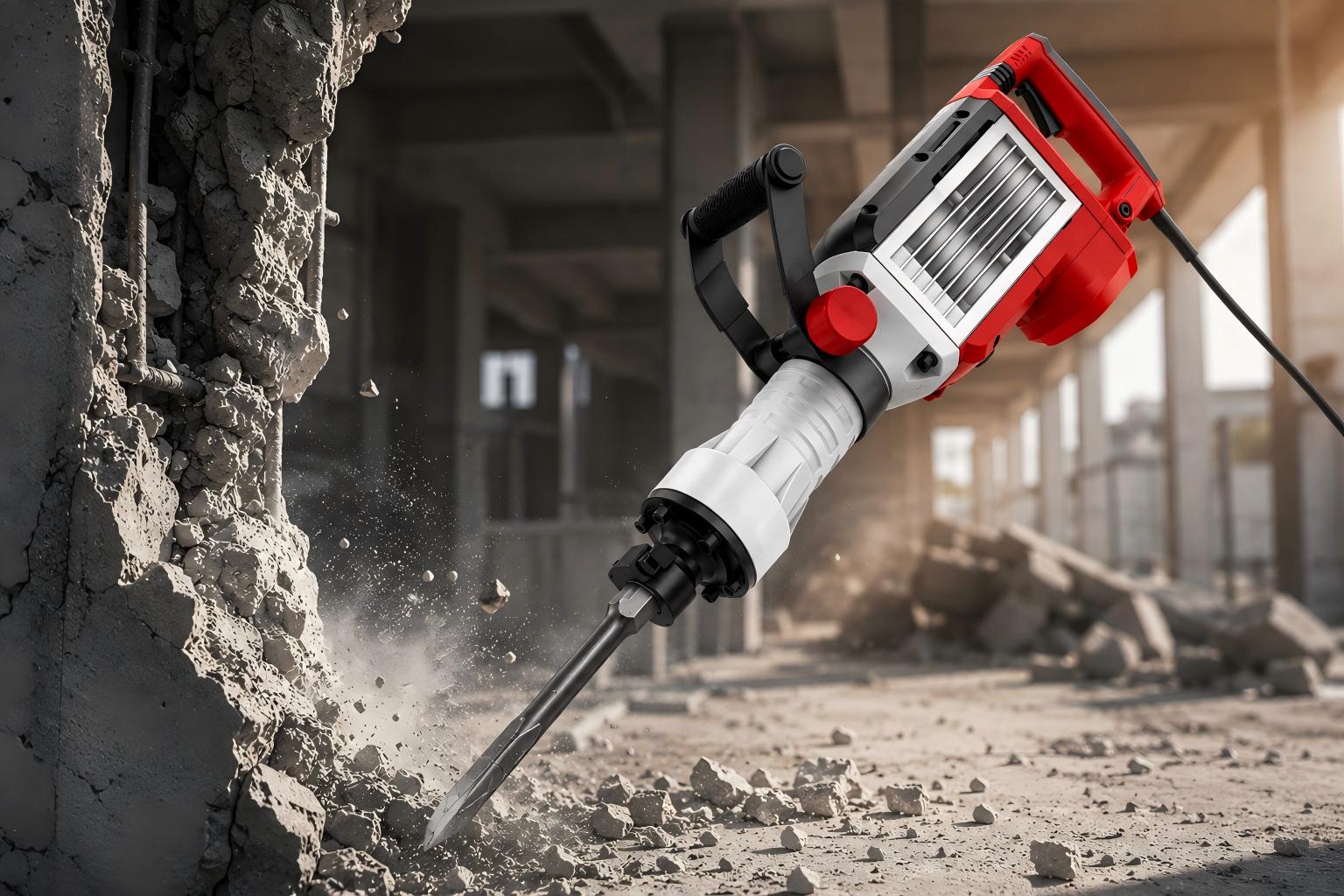
In heavy-duty engineering—such as thick concrete foundation fracturing and structural pavement modifications—electric demolition hammers are subjected to continuous, destructive reverse shockwaves. Without robust structural engineering, the immense kinetic energy meant for the concrete will destroy the tool's internal alignment.
For international industrial buyers, evaluating the housing materials and damping infrastructure is essential to preventing premature fleet failure.
1. Magnesium Alloy Crankcases: Structural Integrity Under Extreme Heat
Unlike light drills that can tolerate polymer housings, a heavy 15kg to 30kg electric jackhammer requires a full-metal enclosure for its mechanical core. Leading industrial factories utilize die-cast magnesium alloy for the main gear housing and crankcase. Magnesium alloy provides the ideal structural balance: it is significantly lighter than steel, yet offers exceptional structural rigidity to keep the heavy-duty crankshaft and connecting rod in perfect alignment, while acting as a massive heat sink to dissipate internal thermal buildup during non-stop operation.
2. Active Vibration Control (AVT): Protecting Both Motor and Operator
Continuous exposure to high-m/s² vibration is the leading cause of internal component displacement (such as loose wiring terminals and fractured field coils) and operator fatigue. Professional-grade electric breakers incorporate mechanical Active Vibration Control (AVT) systems. By utilizing internal counter-balance weights that shift in direct opposition to the striker piston, these tools neutralize up to 50% of structural vibration, significantly extending the service life of internal electronics and maintaining safe working conditions on site.
3. Carbon Brush Auto-Cut Systems: Preventing Armature Destruction
The electric motor remains the heart of the tool. When carbon brushes wear down completely in the field, standard tools risk severe electrical arcing that can instantly destroy the copper commutator. Industrial electric demolition hammers are equipped with auto-stop carbon brushes. The moment the brush wears down to its wear limit, an internal spring-loaded pin pops out to break the electrical circuit automatically, signaling the maintenance team before any expensive motor damage occurs.
Related News


