

Stay updated with our factory’s latest R&D innovations, manufacturing updates, and maintenance guides.
Aug. 28, 2026
GS stands for “Geprüfte Sicherheit,” which means “Tested Safety” in German.
GS certification is a voluntary German safety certification. It shows that a product has been tested by an approved and qualified certification body.
GS certification is used for many products, including household appliances, electronic products, toys, and power tools.
For demolition hammer manufacturers and exporters, GS certification can help show that their products meet high safety requirements. It can also help build trust with buyers in Germany.
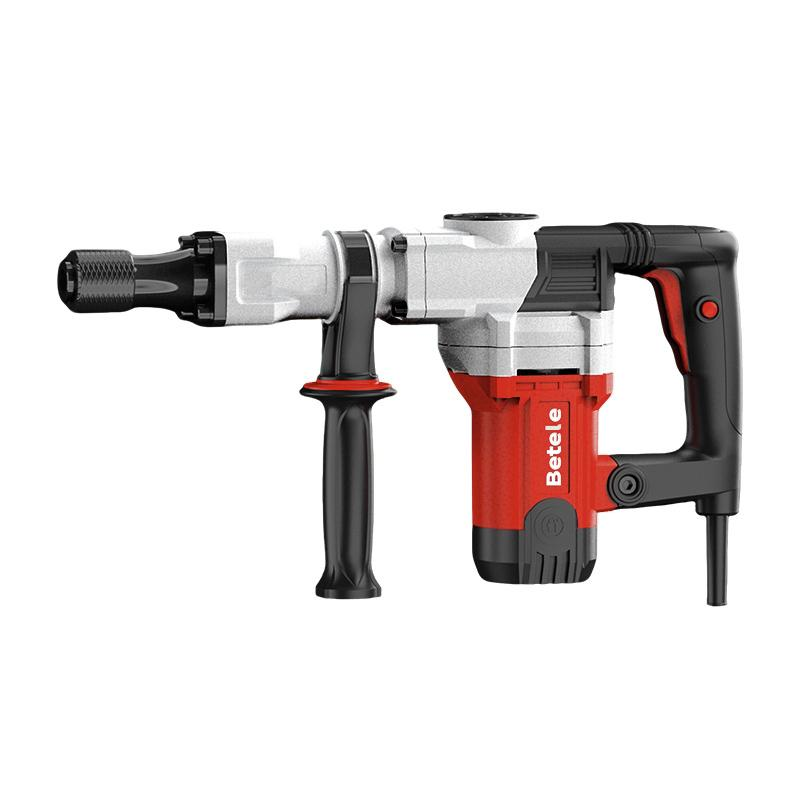
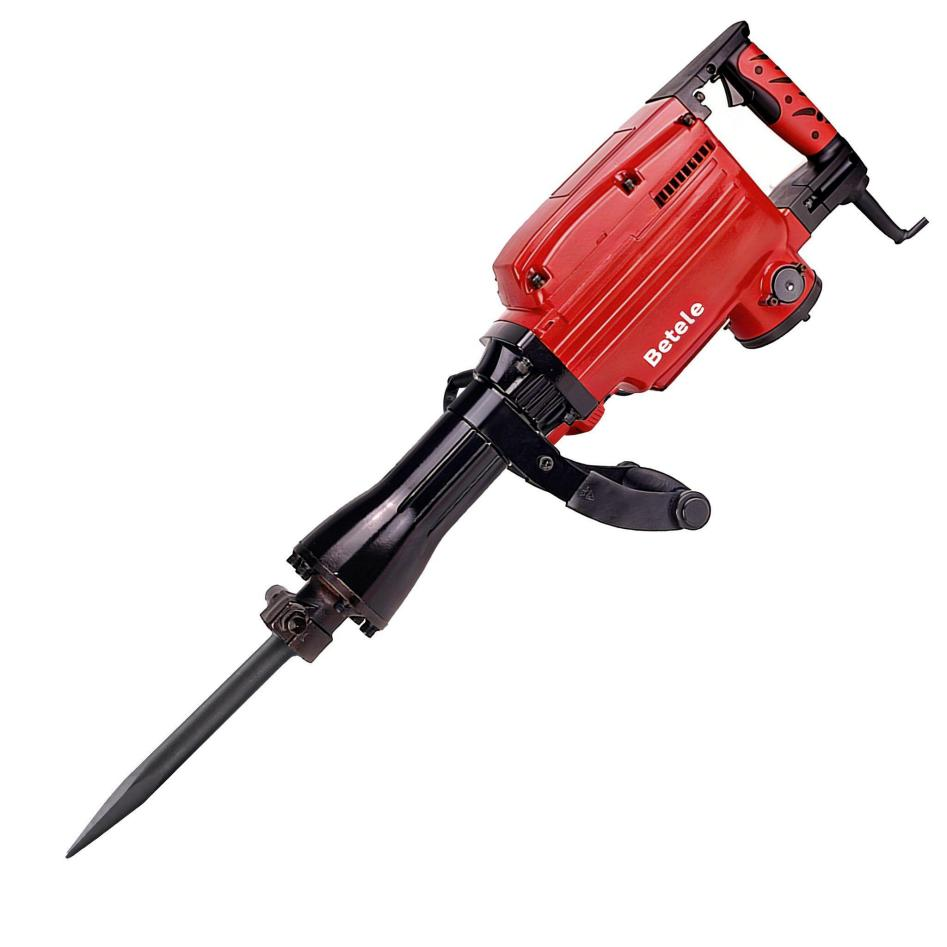
A demolition hammer is a powerful tool used for breaking concrete, brick, stone, and other hard materials.
image_group{“layout”:“carousel”,“aspect_ratio”:“16:9”,“query”:[“demolition hammer breaking concrete construction”,“electric demolition hammer construction site”,“heavy duty demolition hammer concrete”],“num_per_query”:1}
Unlike a normal drill, a demolition hammer is designed to produce strong impact force. It has several important parts, such as:
During use, these parts can be exposed to heat, vibration, electrical loads, and strong mechanical force.
Because of this, demolition hammer safety is an important part of product design and manufacturing.
GS testing may check areas such as:
The exact tests depend on the design and specifications of the demolition hammer.
Before applying for GS certification, a manufacturer normally needs to prepare technical documents.
Common documents include:
For a demolition hammer, important components may include the motor, switch, power cord, plug, capacitor, gearbox, impact mechanism, tool holder, and insulation materials.
The certification body may ask for other documents based on the product design.
The GS certification process normally includes several steps.
The certification body first reviews the product and explains the required documents, testing requirements, and applicable standards.
This step helps the manufacturer understand what needs to be prepared before testing.
The manufacturer submits the required technical documents.
These may include product drawings, electrical diagrams, component information, specifications, and user manuals.
Complete documents can help make the certification process faster.
Engineers review the product design and technical information.
If they find a problem, the manufacturer may need to provide more information or make changes to the product.
The manufacturer provides product samples for testing.
Depending on the product, tests may include:
For a demolition hammer, the impact mechanism and tool holder are also important parts of the product’s safety.
GS certification may also include a factory inspection.
The inspection may check areas such as:
Follow-up inspections may also be required to maintain the certification.
If the required testing and inspections are completed successfully, the certification body can issue the GS certificate.
The manufacturer can then use the certification to show that the demolition hammer has passed the required independent safety assessment.
GS certification uses applicable German and European safety standards.
The standards used for a demolition hammer depend on factors such as:
Some safety tests are similar to tests used for CE compliance.
However, GS certification and CE marking are not the same.
Manufacturers should confirm the correct standards with the certification body before starting the certification process.
GS and CE are often mentioned together, but they have different purposes.
|
GS Certification |
CE Marking |
|
Voluntary certification |
Required when applicable EU law requires it |
|
Strongly associated with Germany |
Used for products covered by EU legislation |
|
Includes independent testing and certification |
Usually based on the manufacturer’s conformity assessment |
|
Provides additional safety information |
Shows conformity with applicable EU requirements |
|
Can increase buyer confidence |
Supports access to the EU market |
A demolition hammer can have both CE marking and GS certification.
CE marking may be required when the product falls under applicable EU legislation. GS certification can provide additional evidence of product safety.
The time needed for GS certification depends on the product and certification body.
The process may take several weeks. The actual time can change because of:
Manufacturers can reduce delays by preparing complete documents and suitable product samples before testing begins.
If a product fails a test, additional time may be needed to correct the problem and complete another test.
GS certification can be issued by qualified certification bodies.
Well-known organizations include:
The right certification body depends on the product and the required certification scope.
Manufacturers should confirm that the selected certification body can provide GS certification for the specific demolition hammer.
GS certification is only one factor when choosing a demolition hammer.
Buyers should also check the tool’s performance, quality, and safety features.
Important specifications include:
For heavy-duty demolition work, impact energy and durability are especially important.
Buyers should also check the manufacturer’s quality control and production capability.
A reliable demolition hammer manufacturer should be able to provide product specifications, technical documents, test reports, and quality information.
Certification is important, but it is not the only factor when choosing a supplier.
A reliable manufacturer should have:
For importers and distributors, checking these factors before placing an order can help reduce product and quality risks.
GS certification is a voluntary safety certification that can be valuable for demolition hammer manufacturers targeting Germany.
The certification process may include technical document review, product testing, and factory inspection.
GS certification does not replace applicable CE requirements. Instead, it can provide additional evidence that a demolition hammer has been independently tested for safety.
For manufacturers, exporters, and distributors entering the German market, understanding demolition hammer GS certification early can help reduce certification problems and make the process more efficient.
No. GS certification is generally voluntary.
However, it can provide additional evidence of product safety and may increase buyer confidence in Germany.
Yes.
A demolition hammer can meet the applicable CE requirements and also obtain GS certification.
The time depends on the product, documents, testing requirements, and factory inspection.
A standard project may take several weeks, but the exact time should be confirmed with the certification body.
GS certification normally includes an assessment of the manufacturer’s production conditions and safety-related quality controls.
The exact inspection requirements depend on the certification scheme and certification body.
Testing may include electrical safety, insulation, grounding, temperature rise, mechanical safety, and structural safety.
The exact tests depend on the product design and applicable standards.
GS and CE have different purposes.
CE marking shows that a product meets applicable EU legal requirements. GS certification provides additional independent safety testing and certification.
Therefore, they should not be viewed as direct alternatives.
Yes.
Although GS certification is generally voluntary, it can provide additional evidence of product safety and may help increase trust among German buyers, distributors, and retailers.
Related News


