

Stay updated with our factory’s latest R&D innovations, manufacturing updates, and maintenance guides.
Aug. 14, 2026
Throughout human history, construction has always depended on one essential principle: creating strong and reliable connections through precise engineering.
Thousands of years ago, Chinese craftsmen developed the mortise and tenon joint, one of the most impressive examples of traditional structural design. By accurately matching wooden components, builders created durable structures without relying on metal fasteners.
Today, modern construction has moved from timber structures to concrete, steel, and composite materials. The tools have changed, but the engineering philosophy remains similar.
Modern power tools, especially rotary hammers and demolition hammers, help construction professionals achieve precise processing, secure installation, and long-lasting results.
From traditional woodworking techniques to advanced electric tools, the goal has always been the same:
Building stronger structures through better engineering.
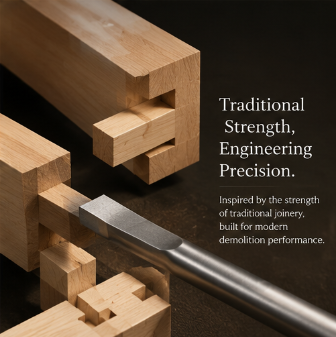
A mortise and tenon joint consists of two carefully designed parts:
The strength of this connection comes from accurate design and craftsmanship.
A small difference in size can affect the stability of the entire structure. Therefore, traditional craftsmen paid great attention to:
This concept is still important in modern construction.
Whether creating a wooden joint or installing an anchor bolt in concrete, successful construction depends on accuracy and reliability.
Modern buildings require different solutions from traditional wooden architecture.
Construction professionals today work with materials including:
To create reliable connections in these materials, powerful and durable tools are required.
A rotary hammer is widely used for:
A demolition hammer is designed for more demanding applications:
These tools serve the same fundamental purpose as traditional craftsmanship:
Preparing materials accurately so different components can work together effectively.
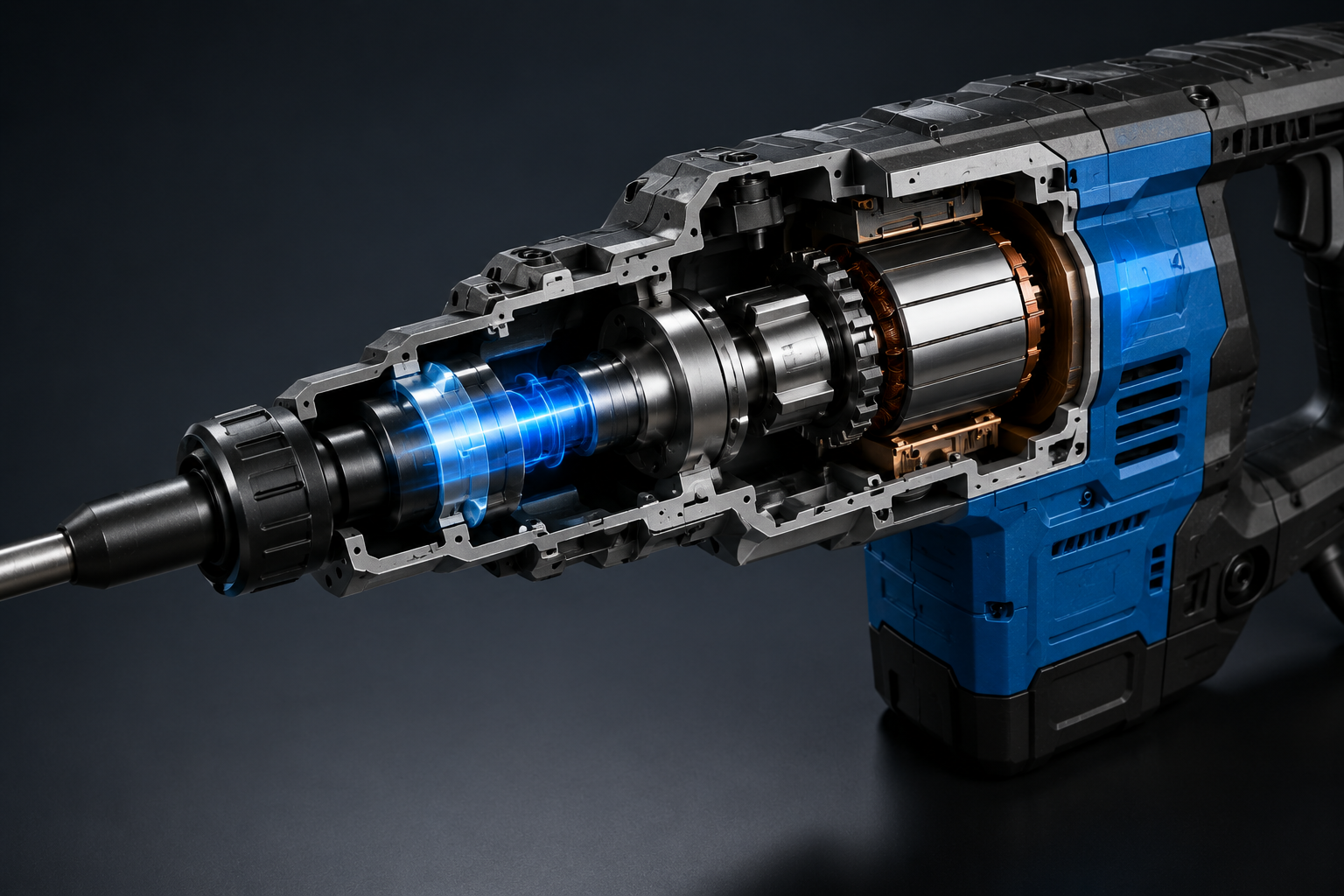
A professional electric hammer is not only about power. Reliable performance comes from careful engineering and manufacturing.
Key components include:
The motor is the core of an electric hammer.
A high-quality motor should provide:
The gearbox transfers power from the motor to the impact mechanism.
A durable gearbox requires:
For demolition and heavy drilling applications, impact energy is critical.
Professional users consider:
Just like a mortise and tenon joint requires precise fitting, a power tool requires accurate internal coordination between every component.
For contractors and distributors, a power tool is not simply a product. It is a long-term working partner.
During construction projects, users often face:
A reliable rotary hammer or demolition hammer can help:
Therefore, professional buyers usually evaluate more than price.
They also consider:
Behind every reliable electric hammer is a complete manufacturing process.
Professional power tool production requires attention to:
A responsible manufacturer does not only focus on producing tools but also on ensuring consistent performance from every unit.
This is similar to traditional craftsmen who carefully checked every joint before completing a structure.
Quality comes from attention to every detail.
Different construction tasks require different tool solutions.
Suitable for:
Advantages:
Suitable for:
Advantages:
Suitable for:
Advantages:
Selecting the correct tool improves efficiency and extends service life.
The connection between mortise and tenon structures and modern power tools is not about using the same technology.
It is about sharing the same engineering values:
Ancient craftsmen used traditional techniques to create structures that lasted for centuries.
Modern manufacturers use advanced production technology to create electric tools that support today's construction industry.
Different generations, different technologies, but the same pursuit:
Creating products that people can trust.
The story of construction is a story of continuous improvement.
From traditional mortise and tenon structures to modern rotary hammers and demolition tools, engineering has always focused on one goal: making construction stronger, safer, and more efficient.
At Betele, we believe that reliable tools come from the combination of engineering knowledge, manufacturing experience, and strict quality control.
By understanding both traditional craftsmanship and modern construction requirements, we continue to develop power tools that help professionals around the world complete their work with confidence.
Related News


