

Stay updated with our factory’s latest R&D innovations, manufacturing updates, and maintenance guides.
Sep. 02, 2026
By Betele Power Tools Engineering Team-Alex
Drilling reinforced concrete is more difficult than drilling ordinary concrete. The challenge is not only the concrete itself, but also the steel reinforcement inside it. When a drill bit encounters rebar, drilling can slow down suddenly, vibration can increase, and forcing the tool can damage the bit or machine.
This guide focuses on the actual drilling process: choosing the right rotary hammer, selecting an SDS Plus or SDS Max bit, starting correctly, controlling pressure and heat, and knowing what to do when the bit hits rebar.
Field-Tested Insight: The following procedures are based on drilling procedures and quality testing used by the Betele production and quality-control team, with more than 25 years of rotary hammer and demolition hammer manufacturing experience.
|
Requirement |
Recommended Choice |
|
Power tool |
Rotary hammer with hammer-drill mode |
|
Drill bit |
Quality SDS Plus or SDS Max carbide bit |
|
Technique |
Light, steady pressure |
|
Rebar |
Rebar detector or a plan for repositioning the hole |
For small anchor holes, an SDS Plus rotary hammer is usually sufficient. For larger holes and heavier concrete drilling, an SDS Max rotary hammer can provide greater impact energy and accept larger bits.
A typical reinforced-concrete drilling setup includes:
Before drilling, check whether the work is permitted and whether the concrete contains structural reinforcement, electrical conduits, water pipes, or other embedded services.
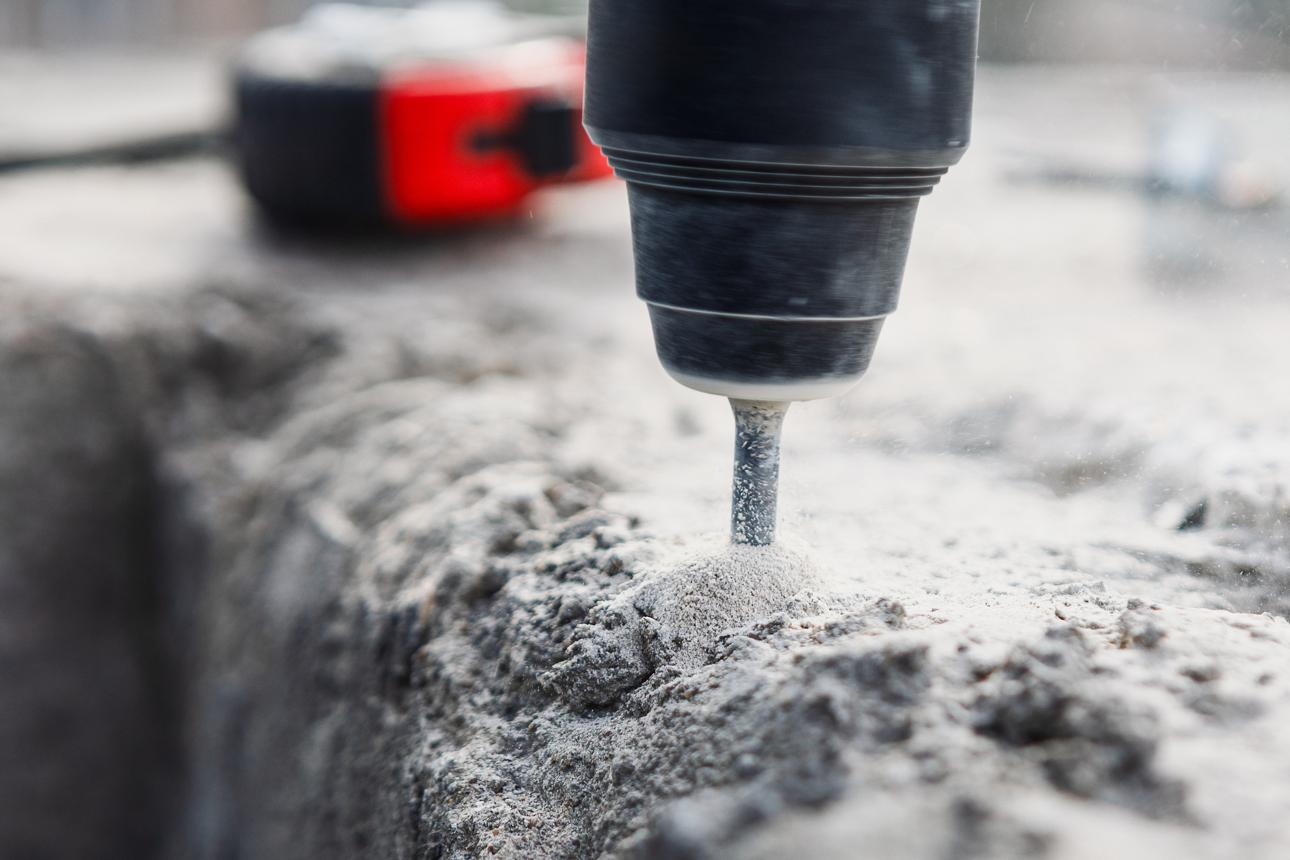
The first decision is the required hole diameter.
A tool that is too small may struggle with larger holes, while an oversized tool can make smaller drilling jobs harder to control.
|
Hole Diameter |
Typical Tool Class |
Recommended Shank |
|
4–10 mm |
Light SDS Plus rotary hammer |
SDS Plus |
|
10–18 mm |
Medium SDS Plus rotary hammer |
SDS Plus |
|
18–26 mm |
Heavy SDS Plus or SDS Max |
SDS Plus / SDS Max |
|
26–52 mm |
Heavy-duty rotary hammer |
SDS Max |
|
Above 52 mm |
SDS Max + core bit / core drill |
SDS Max / Core |
These are general guidelines. Concrete strength, drilling depth, reinforcement density, and bit type can also affect the correct choice.
SDS Plus is commonly used for smaller holes and general construction work, while SDS Max is designed for larger diameters, deeper holes, and more demanding concrete applications.
Suggested image: SDS Plus vs. SDS Max comparison
Alt text: SDS Plus and SDS Max rotary hammers for reinforced concrete drilling
The drill bit directly contacts the concrete, so its quality has a major effect on drilling performance.
Look for:
Use a carbide-tipped masonry bit rather than a plain steel bit.
Higher-quality carbide can provide better resistance to wear and impact.
For larger SDS bits, 3- or 4-cutter designs can provide more stable cutting performance.
Avoid unnecessarily long bits because excessive length can increase flex and drilling stress.
Practical Tip: A high-quality drill bit paired with the correct rotary hammer is usually more effective than simply increasing the size or power of the machine.
Accuracy is determined during the first few seconds of drilling.
Starting slowly helps prevent the bit from moving away from the intended position.
One of the most common mistakes is pushing too hard.
A rotary hammer already generates impact energy through its internal mechanism. Excessive operator force does not necessarily make the tool drill faster.
Instead:
Guide the tool rather than fighting it.
If the machine suddenly stalls, vibrates unusually, or changes sound significantly, stop and check the drilling conditions.
This is one of the most important parts of reinforced-concrete drilling.
When the bit encounters steel reinforcement, do not simply increase pressure and continue hammering.
If you suspect the bit has hit rebar:
For structural applications, engineering requirements should be checked before cutting or damaging reinforcement.
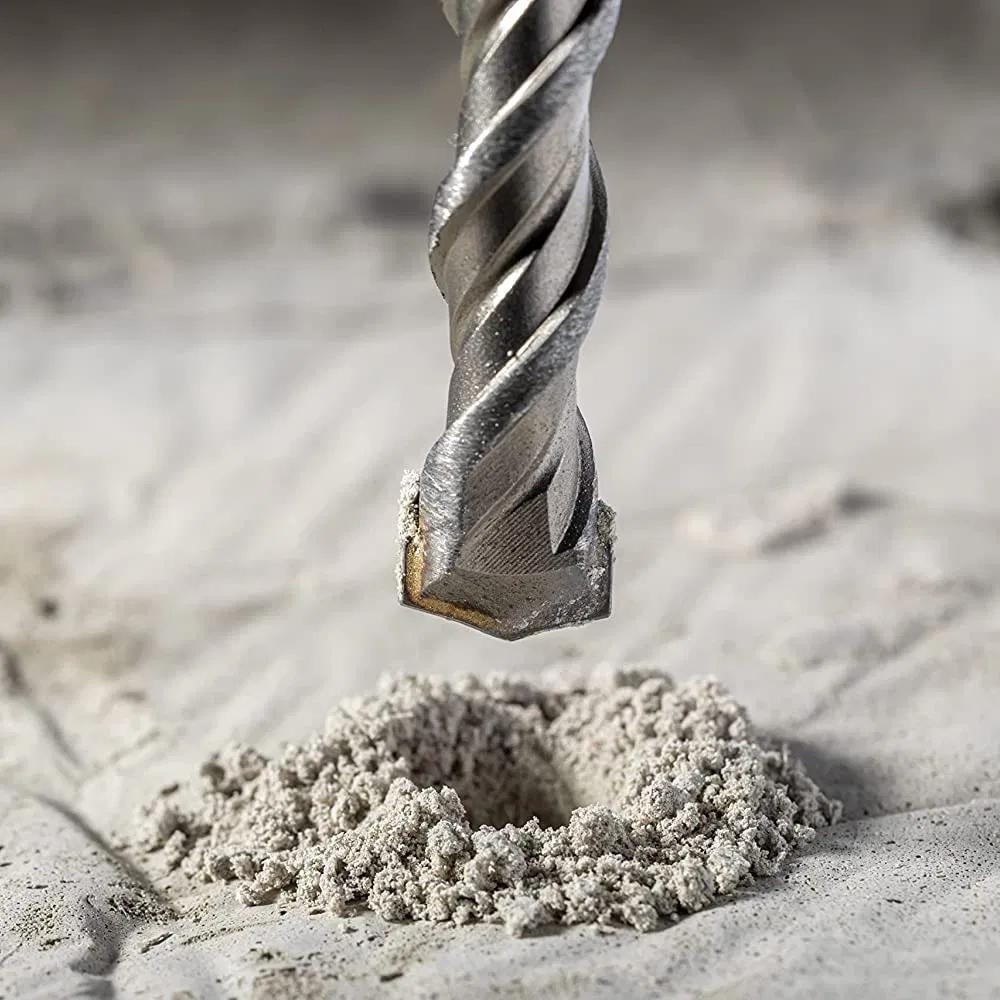
Concrete dust affects both drilling performance and operator safety.
During drilling:
Respirable crystalline silica generated during concrete drilling can be hazardous to health, so dust-control measures and respiratory protection should follow local regulations and worksite requirements.
Heavy drilling, large-diameter bits, deep holes, and hard concrete can increase thermal load on the motor and gearbox.
To reduce unnecessary heat:
From a manufacturing perspective, motor cooling, bearing quality, gearbox design, lubrication, and mechanical construction can all affect long-term performance.
Reinforced-concrete drilling can expose operators to vibration, noise, dust, and flying particles.
Recommended protection includes:
For frequent professional use, vibration-reduction features can also help reduce operator fatigue.
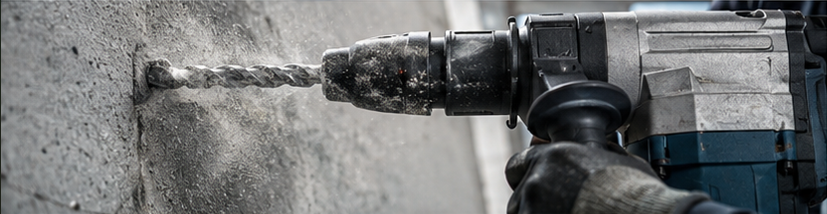
Once drilling is complete:
For specialized fixing systems, follow the anchor manufacturer's installation instructions.
|
Mistake |
What Happens |
|
Pushing too hard |
More vibration and slower drilling |
|
Starting too aggressively |
Bit can move away from the target |
|
Using the wrong tool class |
Poor drilling efficiency |
|
Using a poor-quality bit |
Faster wear and poor hole quality |
|
Forcing through rebar |
Possible bit damage |
|
Allowing dust to accumulate |
Reduced drilling efficiency |
|
Blocking cooling vents |
Increased motor temperature |
|
Ignoring PPE |
Increased exposure to dust, noise and vibration |
Check:
Check:
Check:
Learning how to drill reinforced concrete is not simply about choosing the most powerful rotary hammer.
Good results come from matching the:
Tool → SDS Bit → Hole Diameter → Drilling Technique → Concrete Condition
The basic process is simple:
Choose the right tool → select the correct SDS bit → start slowly → apply steady pressure → control dust and heat → respond correctly to rebar → check the finished hole.
At Betele, concrete and reinforced-concrete testing is part of the product development and quality evaluation process. With more than 25 years of manufacturing experience, the team focuses not only on impact energy but also on consistent performance under real working conditions.
For customers selecting a rotary hammer for a specific application, the key information to confirm includes hole diameter, drilling depth, concrete condition, and working frequency. These factors help determine whether an SDS Plus or SDS Max solution is more appropriate.
Related News


