

Stay updated with our factory’s latest R&D innovations, manufacturing updates, and maintenance guides.
May. 25, 2026
Jackhammers are essential tools in modern construction, demolition, mining, and road maintenance industries. Designed to break concrete, asphalt, rocks, and other hard materials, jackhammers are available in several power types, each suited for different working environments and project requirements. The three most common categories are pneumatic jackhammers, gasoline-powered jackhammers, and electric jackhammers.
Pneumatic jackhammers are powered by compressed air supplied through an external air compressor. They are widely used in large-scale construction sites, mining operations, and industrial demolition projects. One of their biggest advantages is their strong and stable impact force, making them ideal for continuous heavy-duty work.
Because they do not rely on electricity or fuel engines directly inside the tool, pneumatic models are often safer in wet or hazardous environments. However, they require an air compressor and hoses, which can reduce portability and increase setup costs.
Gasoline-powered jackhammers, also known as petrol jackhammers, use two-stroke or four-stroke engines for operation. Their biggest advantage is mobility. Since they do not require electricity or air compressors, they are highly suitable for outdoor and remote job sites.
These machines are commonly used in municipal engineering, road repairs, railway maintenance, and emergency construction work. However, gasoline models usually generate more noise, exhaust emissions, and vibration compared to other types.
Electric jackhammers are powered directly by electricity and are increasingly popular due to their convenience and lower maintenance requirements. Compared with pneumatic and gasoline models, electric jackhammers are generally lighter, cleaner, and easier to operate.
Modern electric demolition hammers are widely used in residential renovation, interior demolition, and medium-duty construction projects. They are especially suitable for environments where lower noise and zero exhaust emissions are required.
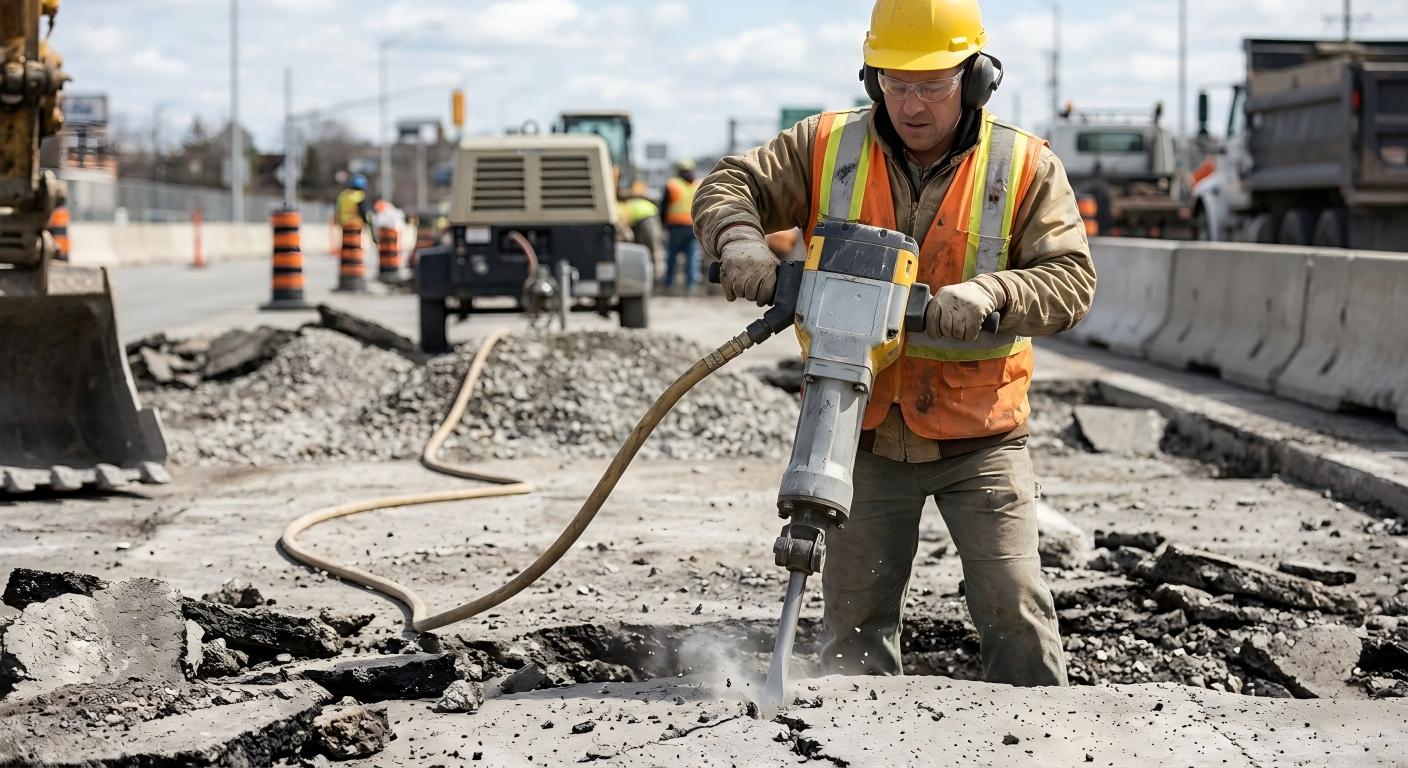
Selecting the right jackhammer depends on several factors, including project scale, working environment, mobility requirements, and available power sources.
As construction technology continues to evolve, manufacturers are also improving efficiency, ergonomics, and environmental performance across all jackhammer categories. Understanding the strengths of each type can help contractors and buyers select the most efficient solution for their projects.
Related News


