

Stay updated with our factory’s latest R&D innovations, manufacturing updates, and maintenance guides.
Jun. 22, 2026
In commercial demolition, a tool’s performance is defined by one primary technical metric: Joule output (impact energy). While the electric motor provides the initial rotational torque, it is the internal electro-pneumatic compression system that converts this torque into the thousands of raw, heavy blows that fracture cured concrete.
For international B2B distributors and engineering buyers, understanding this internal compression physics is crucial to identifying premium, low-degradation heavy equipment.
1. The Electro-Pneumatic Compression Loop: Maximizing Strike Force
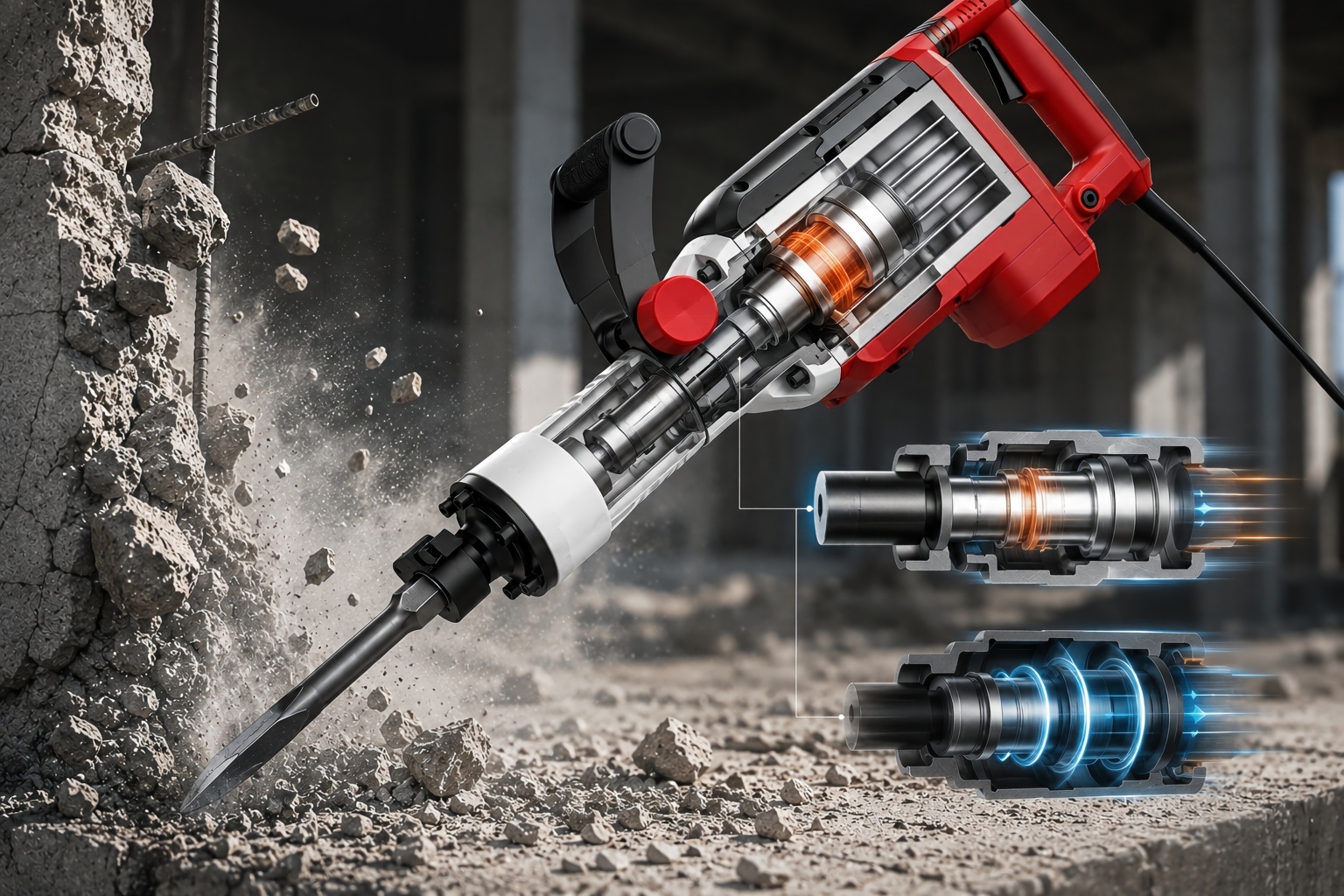
Unlike standard mechanical drills that rely on simple spring-loaded ratchets, an industrial-grade electric demolition hammer utilizes a sophisticated electro-pneumatic design. The electric motor drives a crank gear, which moves a driving piston back and forth inside a precision-bored cylinder.
Instead of striking the chisel directly, this piston compresses an air pocket, creating a high-pressure vacuum that flings a free-floating flying mass (the striker) violently against the impact bolt. This air-cushioned mechanism prevents metal-on-metal destructive recoil within the gear housing, ensuring that the maximum kinetic energy is transferred seamlessly to the concrete substrate.
2. Premium NBR Oil Seals: Preventing Compression Loss
The most common cause of impact energy drop over extended field operations is pneumatic pressure leakage. If the internal O-rings and oil seals degrade under high thermal stress, compressed air escapes from the cylinder, drastically reducing the tool’s Blows Per Minute (BPM) and individual Joule capacity.
Our professional demolition hammers utilize high-tensile Nitrile Butadiene Rubber (NBR) or Viton oil seals paired with heat-resistant synthetic lubricants. This premium sealing architecture maintains perfect airtight compression even when the internal cylinder temperature exceeds 100°C.
Related News


