

Stay updated with our factory’s latest R&D innovations, manufacturing updates, and maintenance guides.
Sep. 15, 2026
By Betele Power Tools Management Team-Shirly
Category: Buying Guides & Applications
Primary Keyword: rotary hammer buying guide
Secondary Keywords: OEM rotary hammer, rotary hammer manufacturer, rotary hammer project, power tool OEM, rotary hammer supplier
Question Keywords: How to start an OEM rotary hammer project? / How to choose a rotary hammer supplier? / What should I check before ordering rotary hammers?
Starting a power tool project is not simply a matter of finding a rotary hammer with a competitive price. For importers, distributors, hardware brands, and construction equipment companies, the more important questions are often: Which models should I start with? What specifications fit my market? Can the supplier maintain consistent quality? And how can I reduce the risk of the first order?
This guide explains a practical way to start a rotary hammer project, from defining the market and selecting models to evaluating the manufacturer, testing samples, confirming OEM requirements, and preparing the first order.
For companies looking for a direct manufacturer rather than a trading company, these steps can also help you evaluate whether a supplier is capable of supporting a long-term power tool project.
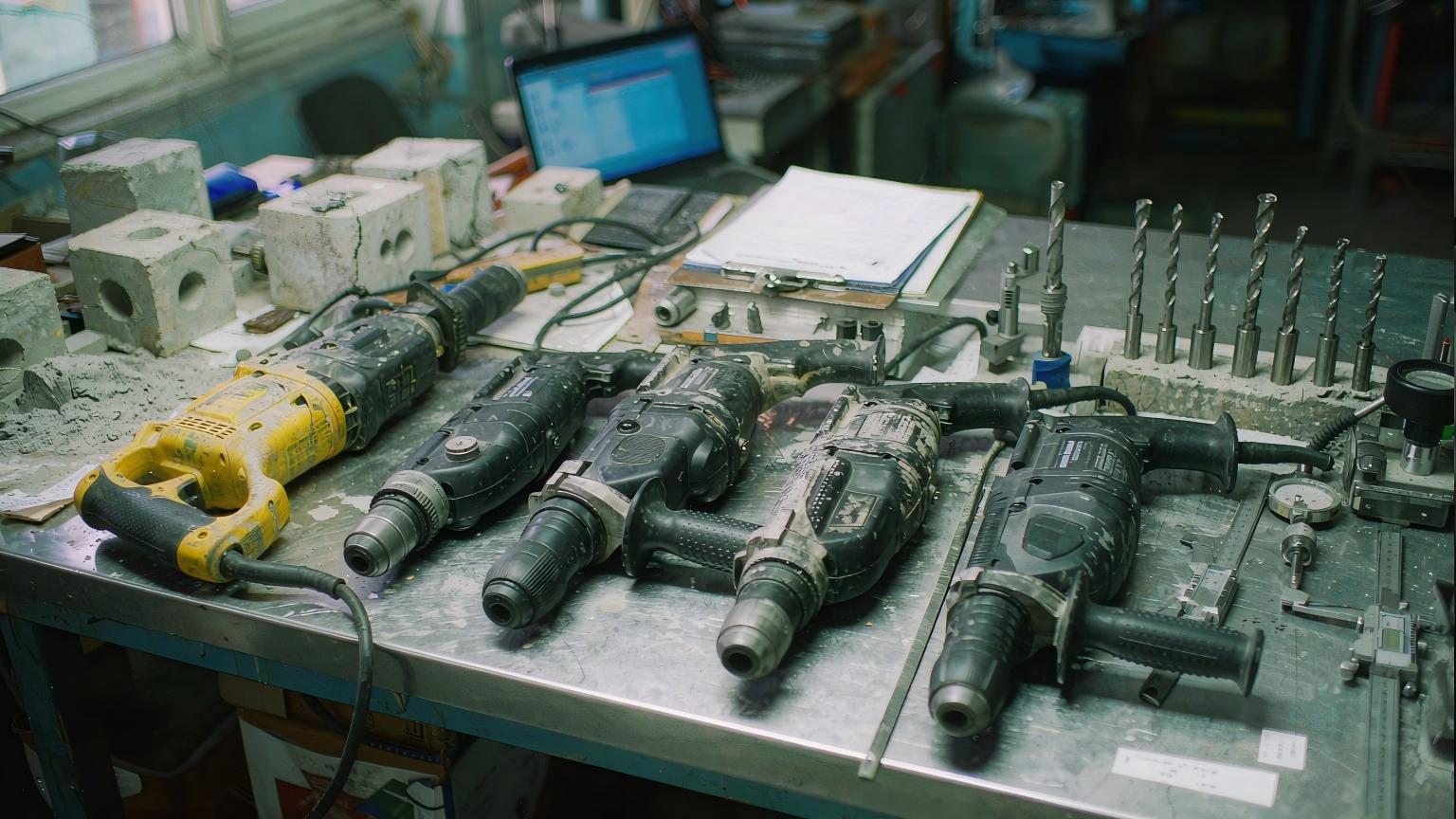
One of the most common mistakes when starting a power tool project is choosing products before understanding the target market.
A rotary hammer that sells well in one country may not be the right choice for another market. Local construction methods, electrical standards, price levels, common drilling diameters, and customer preferences can all influence product selection.
Before contacting a manufacturer, define several basic points:
For example, a distributor serving professional contractors may need a different product portfolio from a retailer mainly selling tools to occasional DIY users.
A practical starting portfolio can include different performance and price levels rather than many similar models.
For a rotary hammer project, this could mean:
This approach allows a new brand or distributor to test several market segments without investing in too many models at the beginning.
After defining the market, the next step is product selection.
The most important specifications should be evaluated according to the actual application rather than simply comparing the largest numbers.
Power
Input power is useful for comparing corded tools, but it should not be considered separately from the tool's overall design and performance.
Impact energy
Impact energy is particularly important when the rotary hammer is used for concrete drilling and chiseling. Higher impact energy can be useful for larger holes and harder materials, but it can also mean a heavier tool.
Drilling capacity
Check the manufacturer's recommended drilling capacity for:
Chuck system
SDS Plus is commonly used for lighter and medium-duty applications, while SDS Max is more suitable for larger drilling and heavier professional applications.
The choice should match the customer's normal workload rather than simply selecting the largest chuck available.
Weight
Weight has a direct effect on handling and working comfort.
For contractors who work overhead or for long periods, a lighter tool can be more practical. For heavy chiseling and demanding demolition work, additional weight may be acceptable if it provides the required performance.
Operating modes
Depending on the model, rotary hammers may provide:
If your market requires mainly demolition work, a dedicated demolition hammer may be a better choice than a rotary hammer.
View Betele Rotary Hammer Products https://www.ibetele.com/rotary-hammer/
Once you have shortlisted several models, supplier evaluation becomes one of the most important steps.
Two suppliers may quote similar-looking rotary hammers, but the actual products can be very different.
When evaluating a rotary hammer manufacturer, ask about:
A supplier that can explain how the product is manufactured and tested is generally more useful for a long-term OEM project than a supplier that only provides a price list.
For example, Betele has been involved in the power tool industry since 2001 and operates its own manufacturing facilities with dedicated production capabilities for key components.
The company has a 30,000-square-meter manufacturing facility and more than 200 pieces of production equipment, with internal motor and gearbox workshops.
This type of vertical manufacturing capability matters because the quality of a rotary hammer depends on more than its external housing.
Motor performance, gear matching, impact mechanism, lubrication, assembly accuracy, and final inspection all contribute to the final tool.
A sample is not just something to check after receiving a quotation. It should be part of the supplier-selection process.
Before committing to a larger order, test the actual model that you intend to sell.
A useful sample evaluation can include:
Test the tool under the applications expected in your market.
For example:
Check:
Inspect:
If possible, do not evaluate only one sample.
For larger OEM projects, consistency between units can be just as important as the performance of a single sample.
This is where factory QC becomes important. A professional manufacturer should have defined inspection procedures rather than relying entirely on visual inspection at the end of production.
If the project involves your own brand, OEM requirements should be confirmed before mass production begins.
OEM customization can involve much more than printing a logo on the housing.
Depending on the project, you may need to confirm:
For example, an OEM rotary hammer may be supplied with a customized box, color sleeve, drill bits, chisels, depth gauge, or carrying case depending on the customer's market requirements.
It is better to confirm these details during the quotation and sample stage rather than making changes after mass production has already started.
For a new brand, you usually do not need to customize everything immediately.
A practical first project can focus on:
After the products gain market feedback, additional customization can be introduced.
A professional-looking product sample does not automatically guarantee consistent mass production.
This is why QC should be discussed before placing the order.
A rotary hammer manufacturer should have quality checks covering different stages of production.
A typical manufacturing process may include:
Incoming materials → Component production → Motor/gearbox assembly → Tool assembly → Performance testing → Final inspection → Packaging
Different factories may organize their process differently, but the important point is whether the manufacturer can clearly explain its quality-control system.
For a rotary hammer, inspection can focus on areas such as:
For an OEM customer, it is also important to establish a clear approved sample.
The approved sample becomes the reference for later production, helping both sides reduce misunderstandings about appearance, configuration, accessories, and packaging.
A new power tool project does not necessarily need dozens of models.
In many cases, starting with a focused portfolio is easier to manage.
For example, a rotary hammer brand could initially select:
|
Product Position |
Typical Purpose |
|
Entry-level rotary hammer |
Price-sensitive customers |
|
Mid-range rotary hammer |
General professional use |
|
Higher-performance rotary hammer |
Heavy-duty applications |
|
SDS Plus model |
General drilling and chiseling |
|
SDS Max model |
Larger drilling and heavier work |
The exact models should depend on the target market and customer requirements.
The goal is not to have the biggest catalog.
The goal is to have the right products for the market.
A focused product range also makes it easier to manage:
For distributors and new brands, this can significantly reduce the complexity of the first project.
The first order is only the beginning of an OEM project.
After the products enter the market, customer feedback may lead to requests for:
This is why manufacturer capability should be evaluated from a long-term perspective.
A supplier that only provides finished products may be suitable for a simple trading order.
An OEM project usually requires more.
You need a manufacturer that can communicate about product development, production, quality control, customization, and future model expansion.
Betele's experience in rotary hammers, demolition hammers, air picks, and related power tools allows OEM customers to develop a product range around different applications rather than sourcing every product from a different supplier.
Explore Betele's Power Tool Range
Before moving forward with a manufacturer, make sure you can answer these questions:
If these questions are clear, the project becomes much easier to control.
Starting an OEM rotary hammer project does not have to mean ordering a large quantity of products immediately.
A more practical approach is:
Define the market → Select a focused product range → Evaluate the manufacturer → Test samples → Confirm OEM requirements → Establish QC standards → Place the first order → Collect market feedback → Expand the range
The most important decision is not simply which rotary hammer is cheapest.
It is choosing a product and manufacturing partner that can deliver consistent quality and continue supporting the project as your business grows.
If you are developing your own rotary hammer brand or looking for an OEM manufacturer, start with your target market, expected application, and preferred product range. A manufacturer can then recommend suitable models and provide samples for evaluation.
View Products — Explore rotary hammers and demolition hammers for different applications.
Compare Models — Compare specifications, performance levels, chuck systems, and applications.
Request a Sample — Test the product before moving to mass production.
Request a Quote — Send your target models, quantity, OEM requirements, and destination market.
Contact Betele — Discuss your rotary hammer OEM project with a professional manufacturer.
Contact Betele for an OEM Rotary Hammer Project https://www.ibetele.com/contact/
Related News


